In the world of weddings, tradition is often comforting, but it can also be a cage. If you dream of a day that truly reflects you, it’s time to rethink every step. Originality doesn’t lie in a trendy color palette or a food truck, but in a deep reflection on what your union represents. Forget everything you’ve seen and get ready to explore avenues that will turn your wedding into a true work of art.
1. The Ceremony
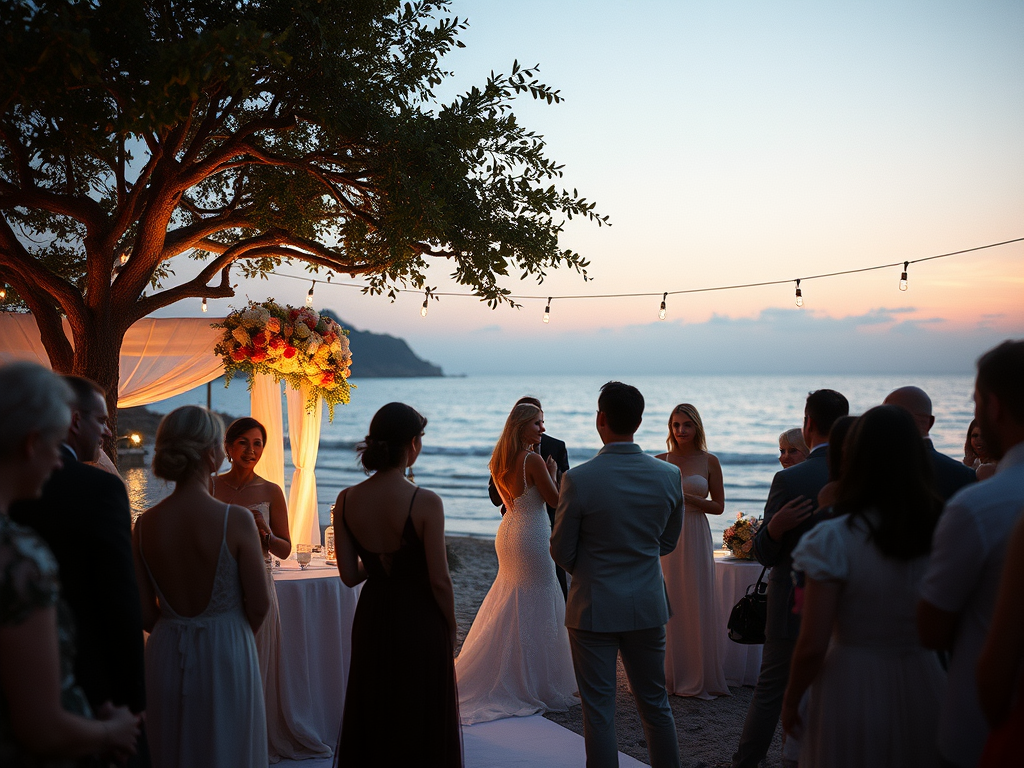
The traditional concept: A secular ceremony led by an officiant, often in a bucolic setting, featuring the exchange of vows and a classic symbolic ritual (the ribbon, the sand, the candle).
The radical alternatives:
- The “Experience” Wedding: Create a ceremony where guests actively participate.
- Alternative 1: The Collective Imprint Ritual. Instead of an individual ritual, invite each person to leave their imprint on a canvas. Provide brushes and paints so the canvas transforms into an abstract, colorful, and vibrant work of art that grows as your loved ones add their touch. This painting will be a reflection of your community’s love for you.
- Alternative 2: The “Suspended Time” Ceremony. Before the ceremony, ask your guests to write an intention or a wish for your couple on a quality piece of paper. During the ritual, each guest will place their wish in a chest that you will open ten years later. It will be a journey back in time that will bring this precious moment back to life.
2. The Decor
The traditional concept: Centerpieces, a floral arch, string lights, and accessories to create an atmosphere. The decor is a static backdrop, often frozen in time.
The radical alternatives:
- The Immersive Experience: Transform the venue into a sensory journey where the decor evolves.
- Alternative 1: The Narrative Path. Don’t decorate the entire space at once. Create a journey for your guests. The cocktail hour can take place in a secret garden where only a few discreet lights highlight a green wall. The dinner, meanwhile, can be in a minimalist and elegant room with a single central element: a monumental art installation that changes color and shape throughout the evening.
- Alternative 2: The Ephemeral and Edible Decor. Dare to use decor that can be eaten or drunk. A main table completely covered with fruits, vegetables, cheeses, and cold cuts, arranged with the art of a baroque still life. The floral arrangements can be composed of aromatic herbs and spices, creating scents that stimulate your guests’ appetites.

3. The Culinary Experience
The traditional concept: A three-course meal with a seated dinner. Dishes are served individually, with little to no interaction.
The radical alternatives:
- The Festival of Flavors: Make the meal a culinary exploration rather than a succession of dishes.
- Alternative 1: The “Traveling Dinner.” Instead of serving a meal at the table, create several “stations” throughout the reception venue. Each station is run by a chef specializing in a different cuisine (Asian fusion, molecular gastronomy, world cuisine). Guests can travel from one space to another, chat with the chefs, and create their own plates. This creates a more dynamic and interactive atmosphere.
- Alternative 2: The “Omakase-style” Tasting. An Omakase, a Japanese term meaning “I’ll leave it up to you,” is a tasting menu with no menu. A Michelin-starred chef has carte blanche to create small dishes (very elaborate appetizers) throughout the evening, serving them directly to each guest or explaining their composition in real-time. It’s an exclusive and surprising experience.
4. The Entertainment
The traditional concept: A DJ or a band to get guests dancing, an activity for the bouquet toss, or a formal waltz.
The radical alternatives:
- The Intimate Show: Offer moments of spectacle that captivate and surprise your guests.
- Alternative 1: The Private Dinner Show. Hire a pianist, but ask them not to just play. Have them improvise on notes or words given by guests. A magician, mentalist, or performer can do a close-up show between tables, creating an atmosphere of surprise and complicity.
- Alternative 2: The Collaborative Creation. Set up a wall of sticky notes. Ask guests to write a word or a phrase about love. Hire a slam artist or a poet who, in the middle of the evening, will improvise a work using the guests’ words. It’s a moving, authentic, and completely unique moment.
5. The Guest Favors
The traditional concept: Dragees, local products, or small personalized objects.
The radical alternatives:
- The “Travel” Gift: Offer an intangible gift, an experience, or a contribution.
- Alternative 1: The “Solidarity Gift.” Instead of offering an object, prepare a message explaining that in their honor, you have made a donation to a charity that is close to your heart. For example, you can sponsor the planting of a tree in a country undergoing reforestation and give each guest a small “certificate” card.
- Alternative 2: The “Photographic Souvenir.” Hire a photographer who will not take traditional photos but artistic and spontaneous photos of your guests. The next day or in the following week, send them a photo of that precise moment, printed on high-quality paper. It’s a precious and personal keepsake that replaces an object with an emotion.

6. The Guestbook
The traditional concept: A book where guests write a short message. It’s often a bit of a forced exercise, and the book often ends up on a shelf, rarely looked at.
The radical alternatives:
- Alternative 1: The “Listening Book.” Instead of a book, set up an audio or video recording station, like a miniature studio or an old-fashioned rotary phone. Guests can leave a short audio message, tell a story about you, or offer advice for the future. Once all the messages are recorded, a sound engineer can compile them into an elegant vinyl or an audio file that you’ll listen to on your first anniversary.
- Alternative 2: The “Mosaic of Memories.” Provide a large board or a wooden structure on which guests can attach a small object that symbolizes their connection to you. This could be a photo, a concert ticket stub, a small key, or a polished stone. The collection of these objects will create a unique, collective work of art that tells a different story every time you look at it.
7. The Seating Chart
The traditional concept: The seating chart, often a headache for the couple. Guests are seated by presumed affinity or family.
The radical alternatives:
- Alternative 1: The “Surprise Table.” Eliminate the seating chart. Your guests choose their place for each course. For the first course, labels indicate “The Lovers’ Table,” “The Dreamers’ Table,” “The Foodies’ Table.” For the next course, the labels change. This approach encourages new encounters, mixing generations and social circles, turning the meal into a true human adventure.
- Alternative 2: The “Micro-table Experience.” Instead of large tables, opt for tables of 4 to 6 people spread out in different spaces and decorated differently. The meal could take place in several “acts”: the appetizer at the “travelers’” table, the main course at the “artists’” table, and the dessert at the “storytellers’” table. Each table would be a new experience and a new conversation.

8. The First Dance
The traditional concept: The waltz or a romantic dance, practiced for weeks and often a bit stiff.
The radical alternatives:
- Alternative 1: The Participatory “Surprise Dance.” Instead of dancing alone, invite your parents and close friends to join you on the dance floor. Record a soundtrack where a loved one tells a funny anecdote about your relationship, and let the music start. Then invite others to join the dance floor. The “dance” becomes a spontaneous and festive moment that symbolizes joy and sharing.
- Alternative 2: The “Luminous Performance.” Hire professional dancers who, instead of a simple choreography, perform a luminous show with LED instruments or costumes. Once the performance is over, the dance floor lights up, and the DJ takes over. It’s a spectacular and memorable entrance that will surprise all your guests.
9. The Bouquet Toss
The traditional concept: The bride tosses her bouquet, and all the single women fight to catch it. A tradition that feels a bit outdated to some.
The radical alternatives:
- Alternative 1: The “Solidarity Bouquet.” The bouquet is not tossed but given to a person who deserves it. The bride can choose one of her bridesmaids, a friend who has overcome a challenge, or a relative who is getting married soon. By giving the bouquet, the bride can take a moment to say a few words to her.
- Alternative 2: The “Unveiling of the Bouquets.” Instead of a single bouquet, the bride has several small, similar bouquets made. She hides them in strategic places and leaves clues for her guests to find them. It’s a fun treasure hunt for all the guests.
Conclusion
The true luxury of a wedding is not in its price but in the audacity to venture off the beaten path. By adopting a radically non-traditional approach, you offer your guests an unforgettable experience, an intimate journey into your story, and you create an event that will be remembered far more than just a beautiful party.


contact@byamaevent.com
 La Chronique d'Amarande
Leave a comment